Republic
Life After LifePlato’s Republic appears in the epilogue as the source of the Allegory of the Cave, a dialogue that gives the book a final image of people confined to a limited view of reality. The author reproduces the parable without further comment, calling its relevance obvious; set beside accounts of near-death experiences, it invites reflection on what happens when someone returns with a changed perspective and finds others unable or unwilling to accept it.
Identity and Presentation
The cited passage comes from Book VII of the Republic, attributed here to the philosopher Plato, dated 428–348 B.C. The allegory takes the form of a conversation between Socrates, Plato’s old teacher, and Glaucon. Rather than introduce it through an extended argument, the author places it in the epilogue and presents the parable itself, leaving its connection to the book’s subject for the reader to recognize.
The Prisoners and Their World
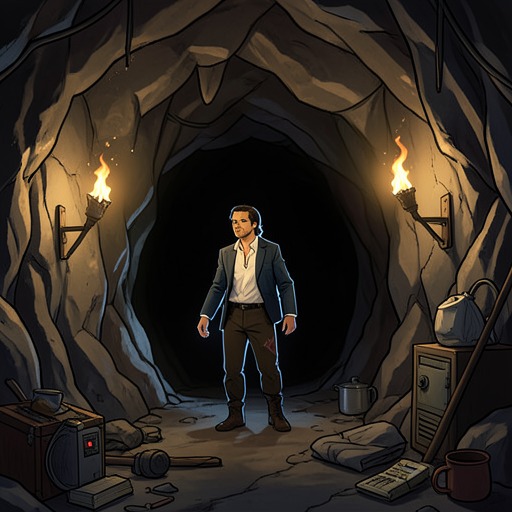
The scene begins with people living in an underground cavern. Fettered by their legs and necks from childhood, they remain in one place and can look only ahead. Behind them burns a fire; between the fire and the prisoners, a road runs beside a low wall, above which figures display puppets. The prisoners’ enforced position narrows what they can see, so the visible appearances in front of them constitute the world available to their experience. The arrangement makes confinement perceptual as well as physical: they have no ordinary means of turning around to discover the objects and light behind them.
Return and Rejection
The passage then considers what happens when a prisoner is released and led upward. On returning to the cave, the traveler’s eyes are still unaccustomed to the darkness, and the prisoners judge his impaired vision as evidence that the ascent was worthless. Their response is not merely ridicule: the dialogue asks whether they would kill anyone attempting to release them and lead them upward, and the answer is affirmative. The would-be guide’s return therefore turns insight into a danger. The difference between what the traveler has seen and what the prisoners can recognize leaves him exposed to the very people he sought to free.
Place in the Epilogue and Textual Record
Because the allegory closes a book concerned with near-death experiences, its emphasis on constrained perception, an ascent beyond familiar surroundings, and a difficult return resonates with the book’s broader subject. The author does not spell out a one-to-one interpretation; instead, the decision to quote the parable without further comment makes the parallel an invitation rather than a fully stated conclusion. The bibliography identifies Edith Hamilton and Huntington Cairns’s 1961 edition of The Collected Dialogues of Plato, while the note to the passage specifies Paul Shorey’s translation and pages 747–749. These details locate the epilogue’s excerpt within a particular modern edition of Plato’s dialogues.